


June 18, 2026
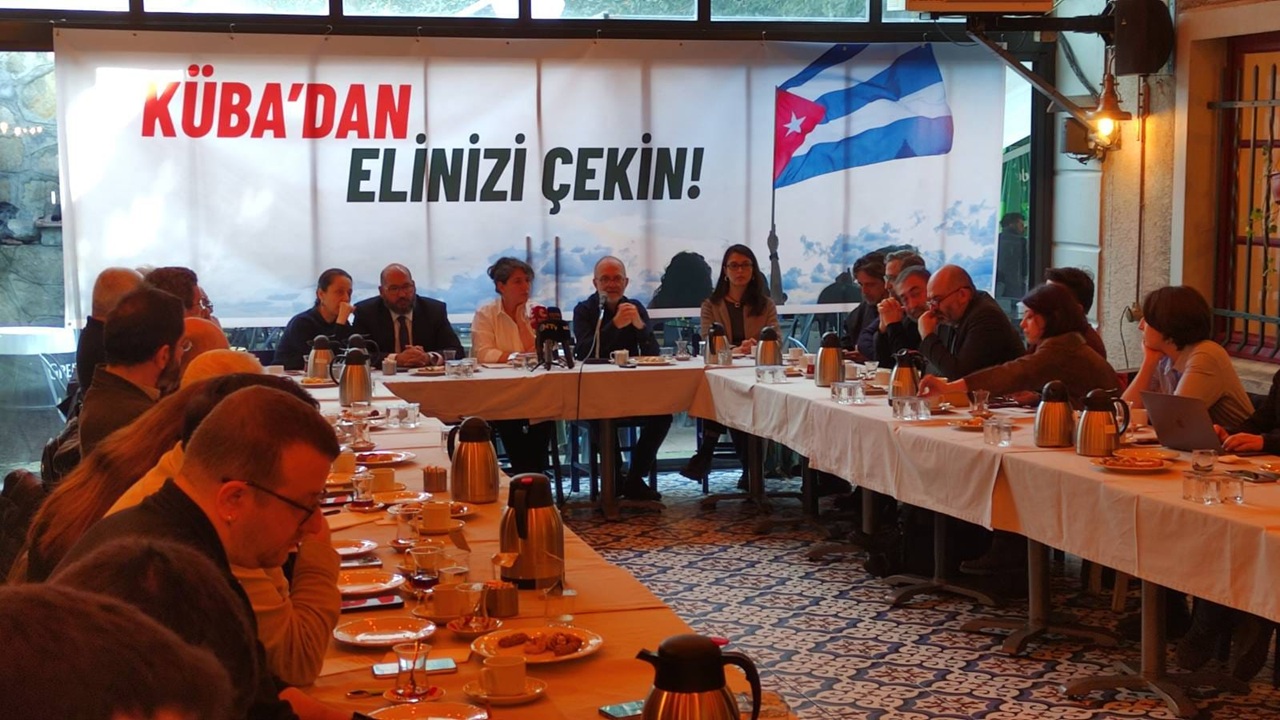
Cuba has renewed its criticism of Washington after new fuel-related restrictions intensified pressure on the island’s economy and public services. According to Harici.com.tr, Cuban Consul General in Istanbul Raúl Ernesto Madrigal Cárdenas said the Jan. 29 decree has widened the scope of the embargo and created conditions that should not be imposed even during wartime. The remarks came during a meeting held at the Nazım Hikmet Cultural Center in Kadıköy, organized by the José Martí Cuba Friendship Association and the Consulate General of Cuba.
“The aim is to create scarcity”
Cárdenas said the US embargo, which has been in place for decades, was designed to create shortages and weaken Cuba from within.
He argued that the latest measures are not simply economic restrictions, but part of a broader effort to obstruct Cuba’s development.
The consul general said sanctions targeting companies and countries that trade with Cuba amount to interference in the sovereign rights of other states.
He also described the embargo policy as “genocidal,” saying it has caused human suffering, blocked development and deepened shortages.
Energy shortage hits daily life
Cárdenas said fuel supply has become one of the most critical areas affected by the new restrictions.
He stated that the limits imposed on Cuba’s access to fuel have disrupted hospitals, schools, electricity production and transportation.
The Cuban diplomat rejected claims that the island represents a security threat, saying the argument is being used to justify unlawful pressure.
Despite the difficulties, he said Cuba will continue to defend its sovereignty and maintain relations with countries willing to cooperate on the basis of equality and respect.
Russia’s oil announcement seen as key step
Cárdenas said Havana is working through diplomatic channels to overcome energy supply problems.
Referring to the Cuban foreign minister’s recent talks in Moscow, he said Russia officially announced that it would send oil to Cuba.
He described the Russian statement as the first open declaration of an oil shipment after the Jan. 29 decree and said Havana hopes it will encourage other countries to move beyond words and take practical steps.
Flights supported through Mexico
The consul general also addressed the role of Mexico in Cuba’s energy supply.
He recalled that Mexico had historically been one of Cuba’s main oil suppliers before pressure increased around Venezuela.
Cárdenas said Mexico has recently sent vessels carrying food and essential goods, but no direct petroleum shipment has entered Cuba yet.
However, he noted that aviation fuel for aircraft flying to Cuba is being provided through Mexico, helping international flights to the island continue.
In Case You Missed It






“Cuba has not collapsed”
Cárdenas also rejected claims that Cuba is bankrupt or has become a failed state.
He said such narratives ignore the reality that schools, hospitals and public institutions continue to function despite severe restrictions.
According to the consul general, the fact that the blockade is being tightened shows that Cuba’s system remains standing.
He argued that if the Cuban state had truly stopped functioning, there would be no need for Washington to increase pressure.
Healthcare sector under strain
José Martí Cuba Friendship Association President Nahide Özkan said the Jan. 29 decree has made life on the island much more difficult.
She said Cuba can meet only 25 percent of its energy needs through domestic resources, while commercial ships have been unable to deliver oil since the decree.
Özkan warned that electricity cuts and transport limits are creating serious risks for pregnant women, cancer patients and people dependent on life-support systems.
She said the association has started a petition campaign to build international pressure and will soon announce a solidarity package that will include financial support.
Information war warning
TKP General Secretary Kemal Okuyan said solidarity with Cuba is not only a political matter but also a struggle against disinformation.
He argued that Cuba is facing an information war alongside economic pressure.
Okuyan said repeating false claims about Cuba helps US policy and harms a country with limited media capacity.
He added that the international effort to ease Cuba’s energy crisis should move from general support to concrete action.
Debate over “Cubanization”
Okuyan also responded to BBP Chairman Mustafa Destici’s statement that Türkiye would not be allowed to undergo “Cubanization.”
He said the meaning of the term should be explained clearly.
If it refers to the spread of values such as equality, solidarity and public welfare, Okuyan said, then this is precisely the kind of change his party supports.
Labor focus in anti-imperialist struggle
Okuyan also linked developments around Cuba to wider global tensions.
He argued that US strategy is shaped by its effort to contain China and rebuild global influence under new conditions.
Okuyan said anti-imperialist movements cannot succeed if they remain disconnected from labor struggles and the demands of working people.






 subscribers.